
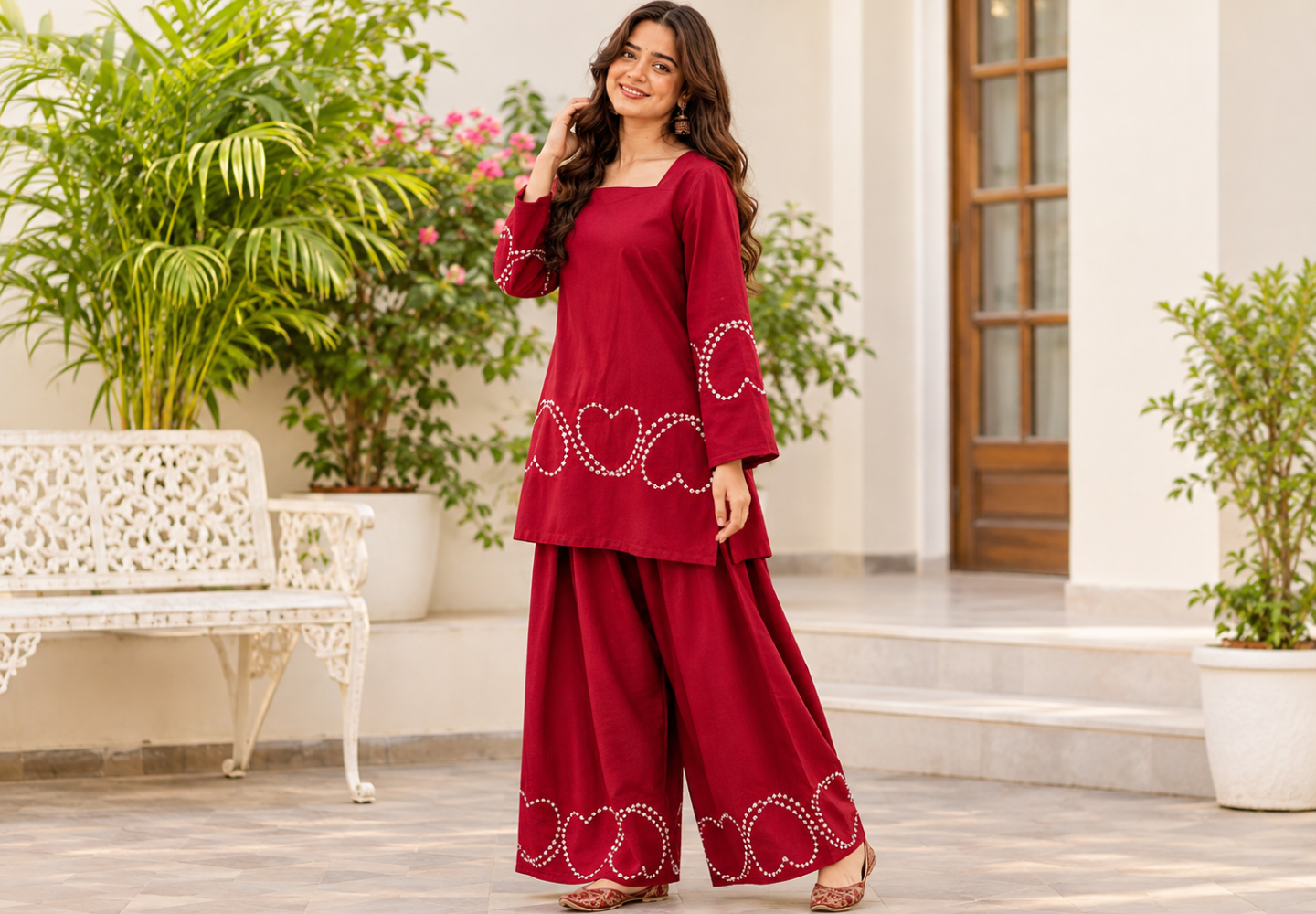
If you have been scrolling through ethnic wear lately, you have probably noticed a long, flowing bottom that looks a little like a skirt and a little like a pant. That is the farshi salwar, and it is quietly making a comeback, this time in light, easy cotton that you can actually wear every day.
In this guide we explain what a farshi salwar is, how it is different from a sharara, gharara and palazzo, and how to style and care for a cotton farshi salwar set.
What Is a Farshi Salwar?
A farshi salwar is a wide, flared bottom with a long, uninterrupted flow from the hip down to the hem. The name comes from the word farsh, which means floor, because the flare is generous enough to skim or gently trail along the ground as you walk.
It is commonly traced back to royal courts of the Mughal era, when it was worn for grand occasions. Today’s version keeps the same graceful flare but is made in lighter fabrics, so it works for casual outings and festive visits, not only weddings.
Farshi Salwar vs Sharara vs Gharara vs Palazzo
These bottoms look similar at first glance, which is why people mix them up. Here is a quick way to tell them apart.
| Bottom | How it looks | Best for |
|---|---|---|
| Farshi salwar | Long, wide, one continuous flare that reaches the floor | Everyday style, outings, festive visits |
| Sharara | Usually fitted through the thigh, flaring out from around the knee | Festive and celebration wear |
| Gharara | Fitted to the knee with a gathered panel, then flares widely | Traditional and formal occasions |
| Palazzo | Wide, straight leg from the waist, usually ankle length | Daily wear, office, travel |
Designs vary from brand to brand, so use this as a general guide rather than a strict rule.
Why Cotton Farshi Sets Work for Everyday Wear
Heavy farshi outfits are lovely, but not very practical for a normal day. Cotton changes that.
- Breathable: cotton lets air move, which helps in warm weather.
- Easy to carry: a cotton flare drapes softly without feeling heavy.
- Simple to maintain: most cotton sets are easy to wash at home, so you can wear them often.
- Works with prints: floral, polka dot and block prints look fresh on cotton and suit the long flare.
How to Style a Farshi Salwar Set
- Balance the volume with the right kurti. Because the bottom is wide, a short or fitted kurti looks best. A corset-style kurti or a short straight kurti keeps your look neat and stops it from feeling too heavy.
- Keep the dupatta simple. If the print is busy, pick a plain or lightly printed dupatta. If the set is solid, you can add a contrast dupatta.
- Choose comfortable footwear. Juttis, kolhapuris and flat sandals work well for the day. Since the hem is long, wear your footwear while checking the length so it does not drag too much.
- Pick jewellery to match the mood. Jhumkas and oxidised silver suit casual sets. For festive days, add a statement necklace or bangles.
- Match the look to the occasion. For college, shopping or a family lunch, keep colours soft. For festivals, go for brighter prints and a heavier dupatta.
How to Choose the Right Size and Length
- Check the waist fit first. A flared bottom should sit comfortably at the waist without digging in.
- Check the length with your footwear. If you plan to wear flats, try the set with flats. A hem that is slightly longer than your usual pant looks intentional, but dragging too much will wear out the edge.
- If you are petite, choose a slightly shorter hem or wear a small heel so the flare does not overwhelm you.
- Read the size chart, not only the S, M, L label. Measurements differ between brands.
How to Care for a Cotton Farshi Set
Always follow the care label on your outfit. As a general guide:
- Wash the first time separately, especially printed sets, in cold or normal water.
- Use a mild detergent and avoid harsh scrubbing on printed or lace areas.
- Dry in shade to protect the colour.
- Iron on a medium setting while the fabric is slightly damp for smooth, crisp flares.
Frequently Asked Questions
Is a farshi salwar comfortable for daily wear?
Yes, especially in cotton. The loose, flared cut gives plenty of room to move, and cotton is breathable.
Can short women wear a farshi salwar?
Yes. Pick a shorter or fitted kurti, check the hem length with your footwear, and consider a small heel if you want more height.
What is the difference between a farshi salwar and a sharara?
A farshi salwar has one continuous flare from the hip to the floor, while a sharara is usually fitted at the thigh and flares from around the knee.
Which kurti goes best with a farshi salwar?
Short, straight or corset-style kurtis work best because they balance the wide flare of the bottom.
Can I wear a farshi salwar set for festivals?
Absolutely. Choose a richer print or a heavier dupatta and add festive jewellery.
How do I wash a printed cotton farshi set?
Wash it separately the first time in mild detergent, dry it in shade and follow the care label.
Shop Farshi Suits at Blending Store
Ready to try the look? Explore our Farshi Suits collection for cotton sets made for everyday comfort. You can also browse the Premium Cotton 60×60 Polka Dot Farshi Pant Suit Set or the Cotton Corset-Style Printed Farshi Salwar Set.
First order with us? Use code Welcome10 for 10% off.
Want more styling ideas? Read our guides on why cotton ethnic wear is perfect for everyday Indian style and how to style ethnic wear for a modern and elegant look.